Article Summary: A rolling sprayer can make agricultural, horticultural, landscaping, greenhouse, and sanitation spraying more efficient by reducing carrying strain, increasing mobility, maintaining consistent liquid delivery, and supporting longer working sessions. Compared with conventional backpack equipment, a wheeled design transfers much of the tank load to the ground, making it easier to move larger quantities of spray solution across demanding work areas. This guide explains how a rolling sprayer works, which design features matter most, how to select the right configuration, and how proper operation and maintenance can improve long-term performance. It also explains how Crosstec develops rolling spraying solutions for professional users, distributors, and private-label customers.

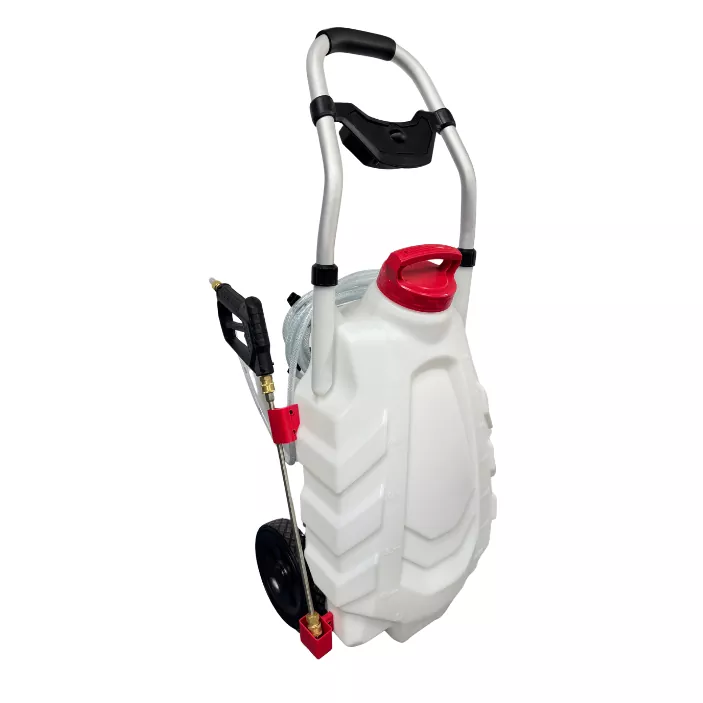
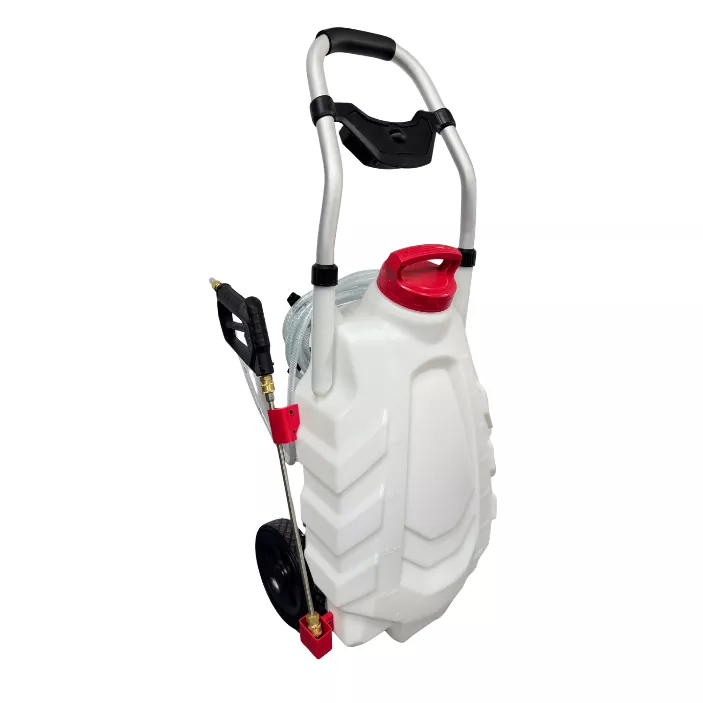
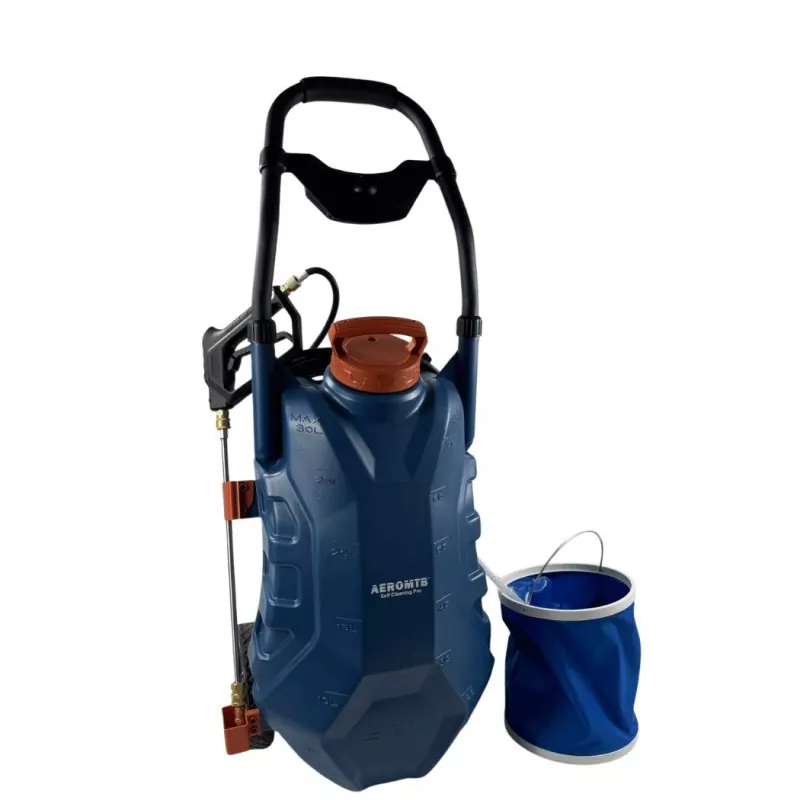
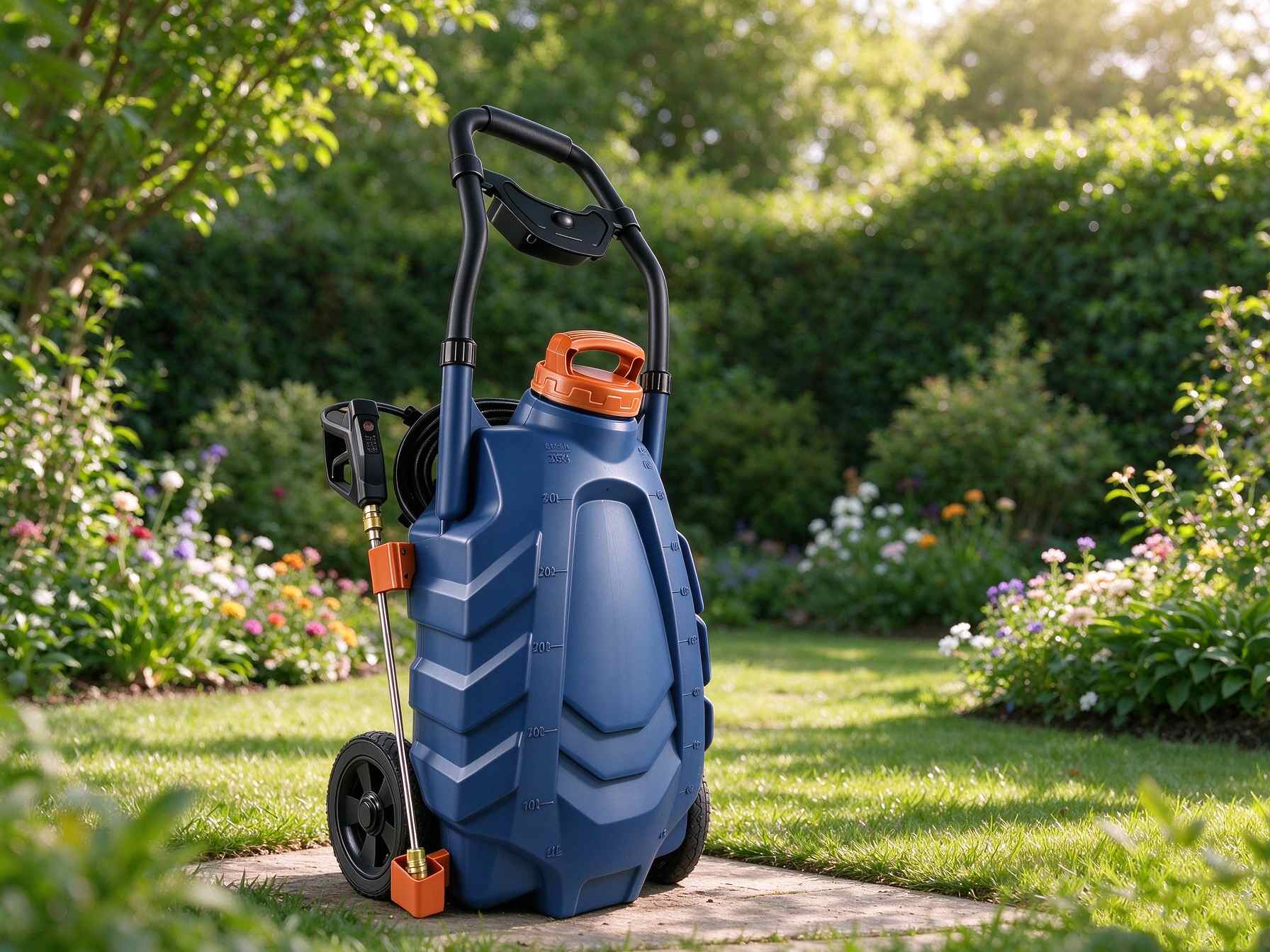
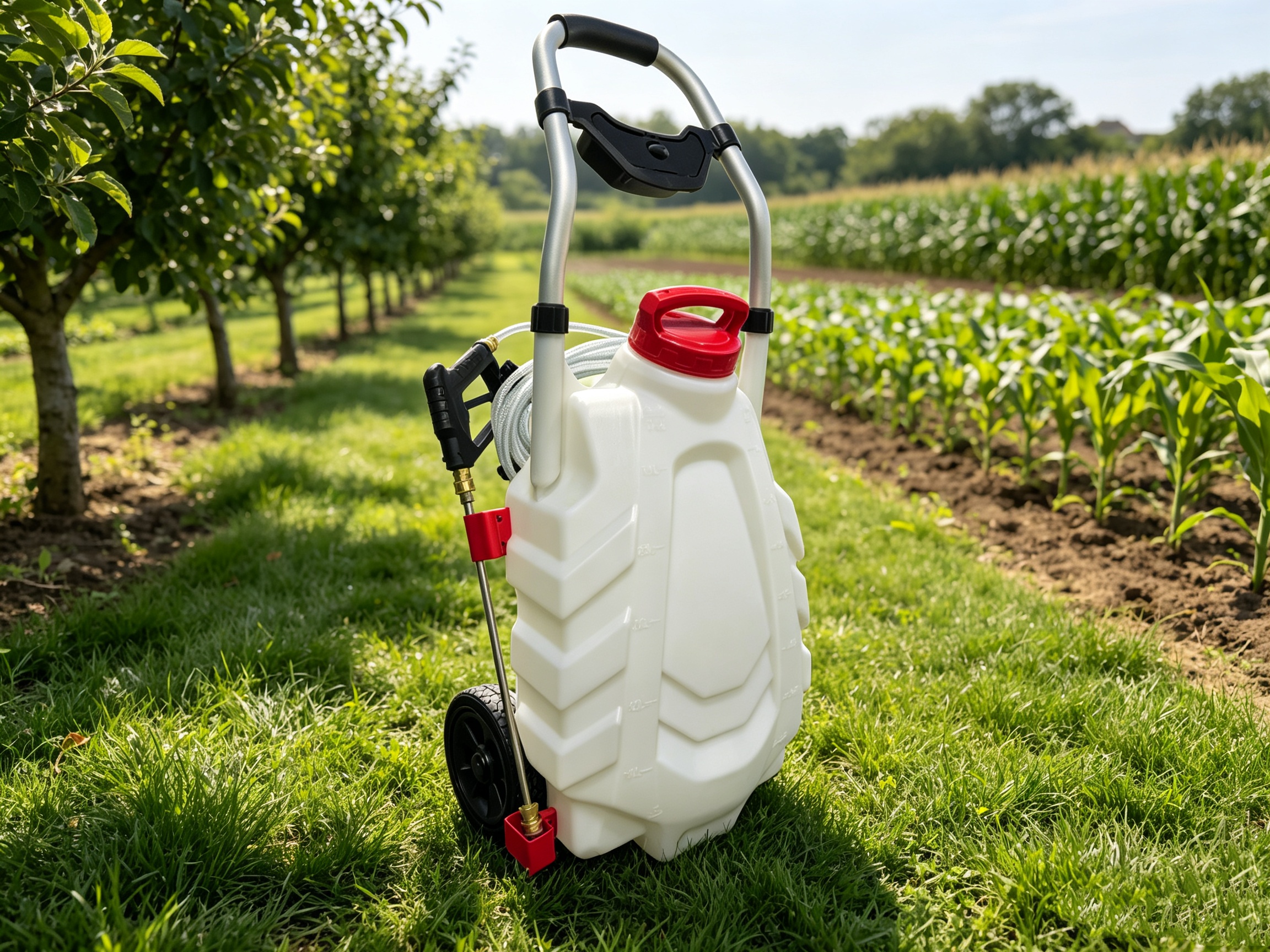
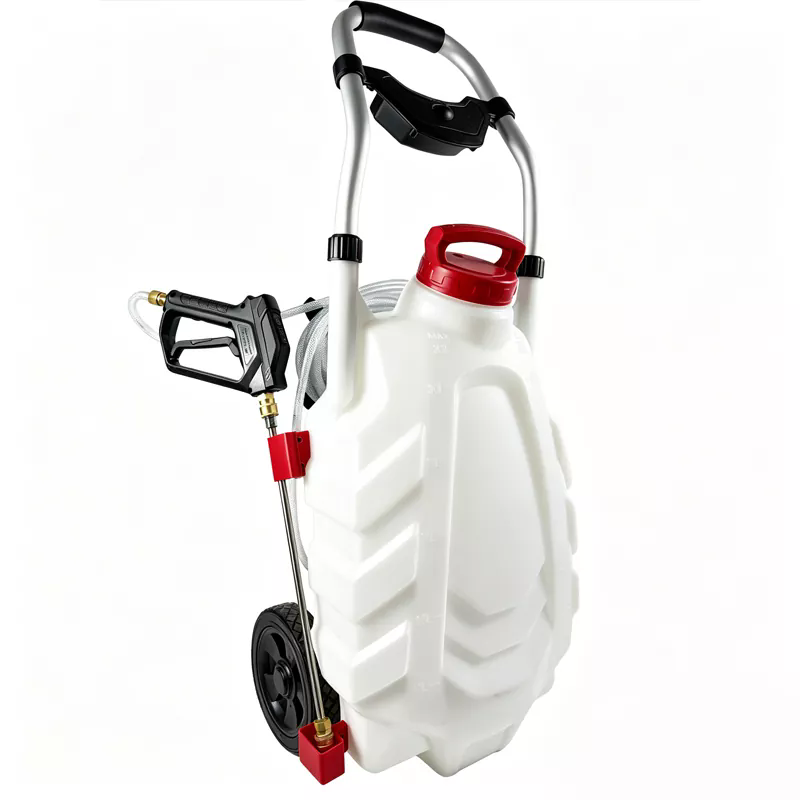
A rolling sprayer is a mobile spraying machine equipped with wheels or a trolley-style frame that allows the operator to move a liquid tank without carrying the entire load on the back. The system normally combines a storage tank, pump, battery or power source, hose, spray lance, nozzle assembly, control system, and rolling frame.
The basic concept is simple: instead of forcing an operator to carry a heavy tank while walking, the equipment uses wheels to support the tank during transportation. This design becomes particularly valuable when spraying large gardens, greenhouses, orchards, nurseries, agricultural plots, commercial landscapes, or other areas where repeated movement is required.
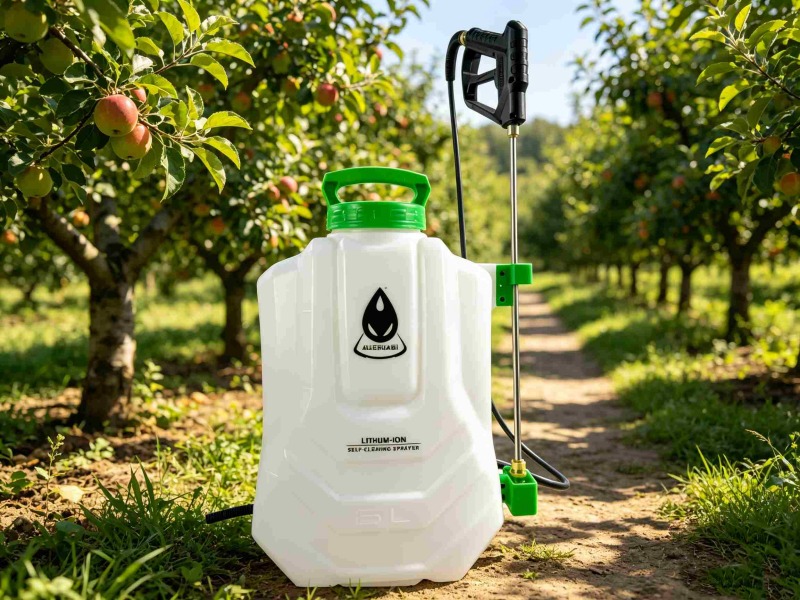
Modern rolling sprayers can also incorporate battery-powered pumping, variable output control, diaphragm pump technology, electronic controls, and other convenience features. For example, selected Crosstec models are designed with features such as Bluetooth control, variable-speed adjustment, and self-cleaning functions. These options can help users reduce interruptions and gain better control over spraying operations.
The main advantage of a rolling sprayer is not simply its ability to spray liquid. Its value comes from combining mobility, capacity, power, and operator convenience into one system.
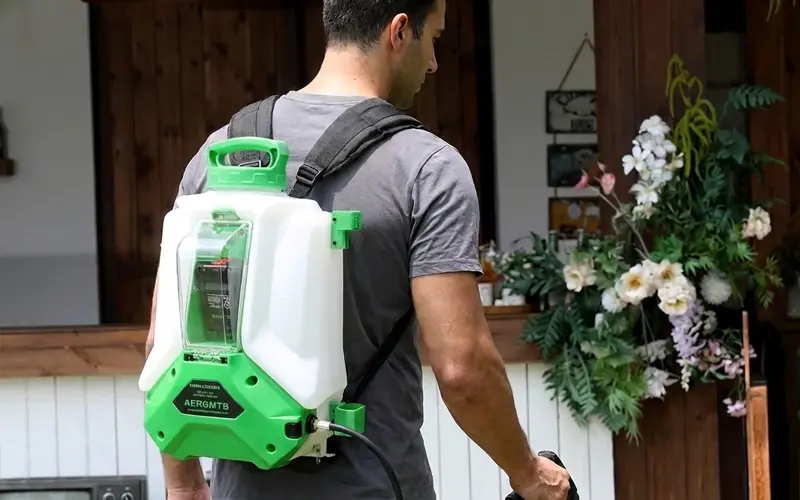
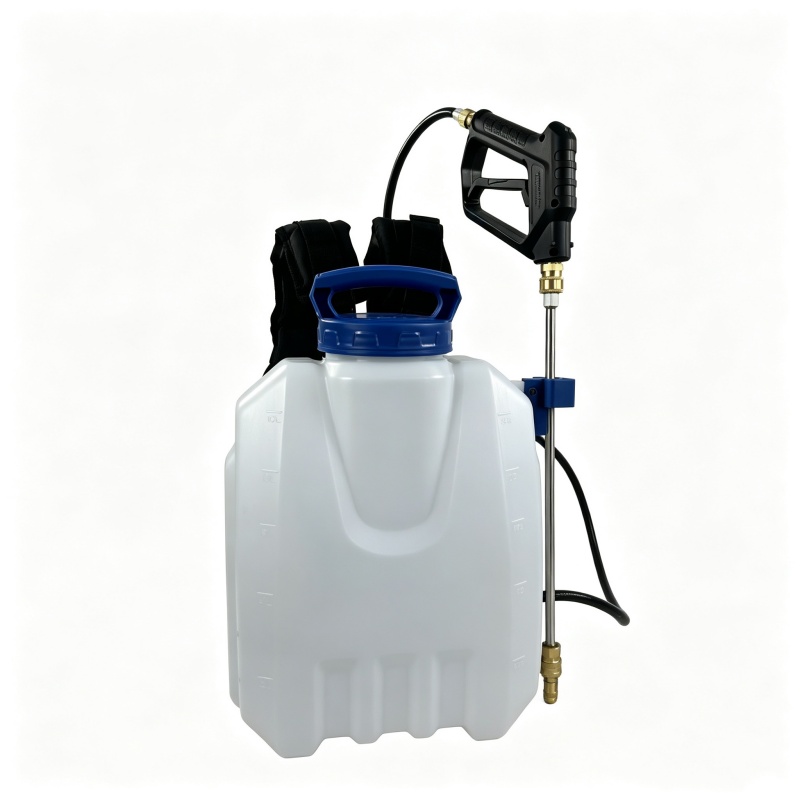
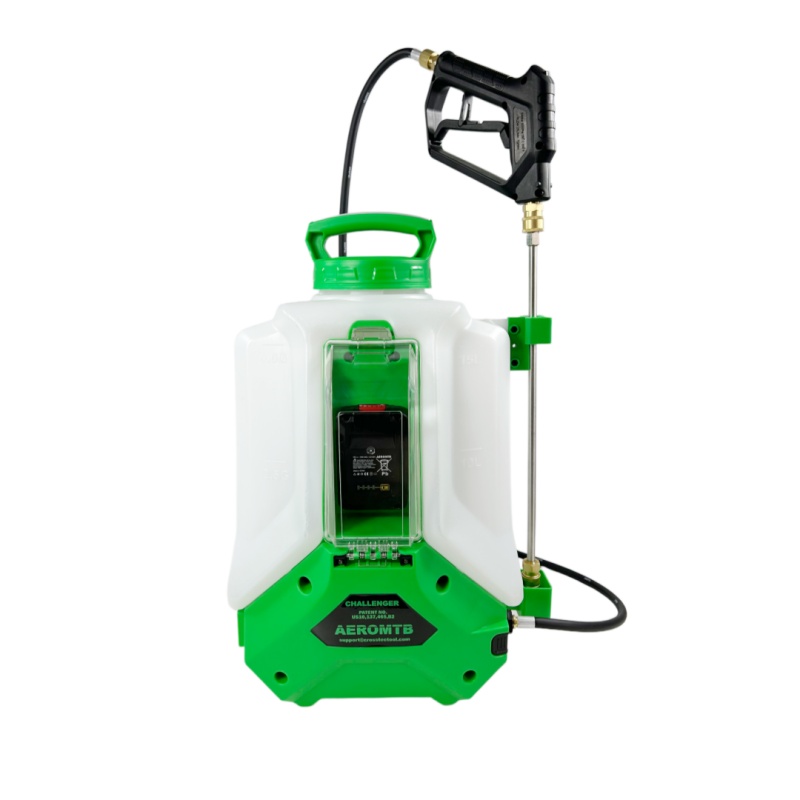
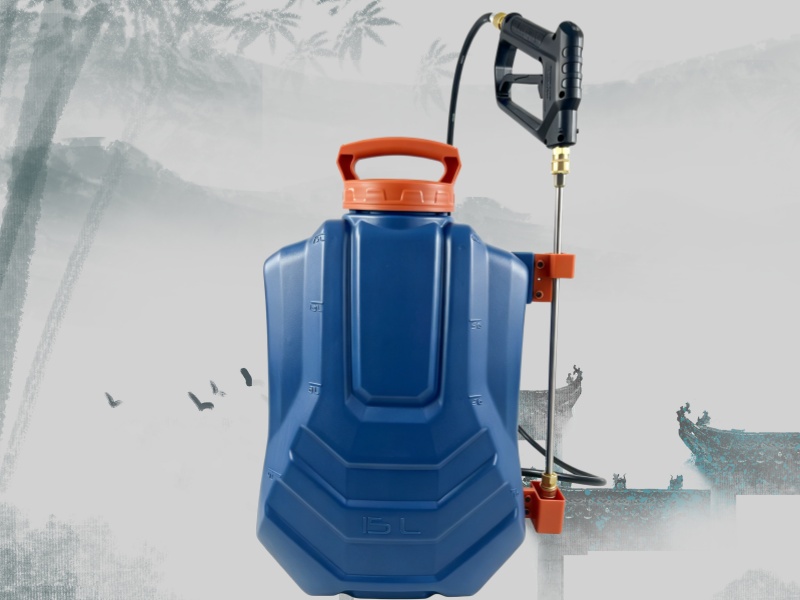
Backpack sprayers place the weight of the tank, liquid, battery, and equipment directly on the operator. As the tank becomes larger, the physical burden increases.
A rolling sprayer transfers most of that weight to the wheels. The operator primarily needs to guide the equipment rather than carry it. This can be especially helpful during long spraying sessions where repetitive lifting and carrying can become tiring.
Frequent refilling can become a major productivity problem. When an operator has to stop repeatedly to refill a small tank, the actual spraying time decreases.
A rolling sprayer can accommodate a larger tank while remaining practical to transport because the wheels provide ground support. Crosstec offers rolling configurations with tank capacities such as 30L and 34L, giving professional users more liquid capacity for applications where longer uninterrupted operation is desirable.
The appropriate capacity still depends on the application. A larger tank is not automatically better if the equipment will be used in narrow greenhouse aisles or compact gardens. Capacity should always be balanced against maneuverability and the physical conditions of the worksite.
Traditional manual sprayers require repeated pumping to build pressure. This adds another physical task to an already demanding job and can result in inconsistent pressure as the operator becomes tired.
Battery-powered rolling sprayers use an electric pump to deliver the spraying solution. This allows the operator to focus on directing the spray rather than repeatedly operating a hand pump.
Crosstec's rolling sprayer range uses lithium battery systems on selected configurations. Depending on the model, users can choose solutions designed around runtime, charging requirements, pressure stability, and application conditions.
Uniform application is essential when spraying fertilizers, pesticides, herbicides, disinfectants, or plant protection solutions. Pressure fluctuations can affect spray pattern, droplet distribution, and coverage.
A suitable diaphragm pump system can provide stable liquid delivery throughout the working process. Variable-speed control can further help operators adjust output according to the application rather than using the same setting for every task.
Spraying rarely involves moving in a straight line across perfectly flat ground. Operators may need to navigate pathways, greenhouse rows, gardens, lawns, orchards, or uneven outdoor surfaces.
A properly designed wheel system can make repositioning substantially easier. Heavy-duty wheels, an appropriate frame, and balanced tank placement all contribute to practical mobility.
Choosing a rolling sprayer based only on tank size can lead to disappointing results. The entire system should be evaluated because pump performance, battery configuration, wheel design, controls, and maintenance features all affect real-world usability.
| Feature | Why It Matters | What to Consider |
|---|---|---|
| Tank Capacity | Determines how much solution can be carried per refill | Match capacity to coverage area and maneuverability |
| Battery | Provides power for electric spraying | Check voltage, capacity, runtime, charging, and replacement options |
| Pump | Controls liquid delivery and pressure | Consider diaphragm construction, pressure stability, and durability |
| Wheels | Determine how easily the machine moves | Consider terrain, wheel diameter, frame strength, and balance |
| Control System | Allows adjustment of spraying operation | Look for practical switches, variable speed, or smart control where needed |
| Hose and Lance | Influence reach and operator convenience | Check length, flexibility, material compatibility, and spray pattern |
| Cleaning System | Helps reduce residue and maintenance time | Self-cleaning or convenient flushing functions can be valuable |
The flexibility of a wheeled spraying system makes it useful across many professional and commercial applications.
Farm operators can use rolling equipment for applying appropriate crop-care solutions across smaller and medium-sized working areas. The reduced carrying burden is particularly useful when spraying must be performed repeatedly throughout a growing season.
Orchards and vineyards often require careful movement between rows. A wheeled sprayer can be positioned along pathways while the operator uses the lance to reach plants from different angles.
Greenhouse environments can benefit from compact mobile equipment because the operator may need to move repeatedly between planting rows. The correct wheel dimensions and overall machine width are important for avoiding damage to plants and infrastructure.
Nursery operators and professional gardeners may need to apply fertilizers, plant-care solutions, or pest-control products across numerous planting areas. A rolling sprayer can reduce the amount of manual carrying required.
Commercial landscaping teams often manage lawns, planted areas, parks, and property grounds. A mobile sprayer can help operators move efficiently between treatment zones while maintaining control over liquid application.
Depending on the liquid and equipment compatibility, wheeled spraying systems can also be used for certain sanitation and disinfection tasks. Operators should always verify chemical compatibility, application requirements, and applicable safety procedures before use.
The best rolling sprayer is determined by the application rather than by a single specification. Before purchasing equipment, evaluate the following factors.
For distributors and professional buyers, another important consideration is whether the manufacturer can provide customized configurations. Tank color, branding, packaging, battery configuration, accessories, and other specifications may need to match local market requirements.
Correct operation helps protect both the equipment and the quality of the spraying work. A practical operating sequence includes several basic stages.
Maintenance is often overlooked until spraying performance begins to decline. A basic maintenance schedule can prevent many common problems.
| Maintenance Task | Recommended Attention | Purpose |
|---|---|---|
| Tank Cleaning | After compatible spraying operations | Reduce residue buildup and cross-contamination |
| Nozzle Inspection | Regularly | Prevent uneven spray patterns |
| Hose Inspection | Regularly | Identify cracks, wear, or leakage |
| Pump Inspection | According to usage and manufacturer guidance | Maintain stable liquid delivery |
| Battery Care | After extended use and during storage | Support reliable runtime and battery life |
| Wheel and Frame Check | Regularly | Maintain safe and easy mobility |
Self-cleaning technology can further simplify maintenance. Selected Crosstec rolling sprayer models incorporate self-cleaning functions designed to help remove residual liquid from the spraying system and reduce cleaning effort.
Both equipment types have legitimate applications. The right choice depends on the work environment, capacity requirements, and operator priorities.
| Consideration | Rolling Sprayer | Backpack Sprayer |
|---|---|---|
| Load Distribution | Weight is mainly supported by wheels | Weight is carried by the operator |
| Tank Capacity | Can support larger capacities in suitable designs | Usually limited by carrying comfort |
| Long-Duration Work | Generally more comfortable for extended ground spraying | Can create greater physical fatigue |
| Mobility | Excellent on suitable ground surfaces | Can be better for steep, narrow, or inaccessible locations |
| Refilling Frequency | Potentially lower with larger tank capacity | May require more frequent refilling |
| Best Fit | Gardens, greenhouses, landscapes, orchards, and larger work areas | Compact, irregular, or difficult-to-access locations |
A rolling sprayer should therefore not be viewed as a universal replacement for backpack equipment. Instead, it is a practical solution when ground mobility and reduced carrying strain are major priorities.
Crosstec focuses on mobile spraying equipment for agricultural, horticultural, gardening, landscaping, and related applications. Its rolling sprayer range is designed around practical problems that professional users commonly encounter: carrying fatigue, repeated refilling, unstable spraying output, difficult cleaning, and limited control.
Available configurations include rolling sprayers with larger tanks, battery-powered diaphragm pumps, variable-speed operation, Bluetooth control, and self-cleaning functions. These features are not equally necessary for every application, which is why selecting the configuration according to actual working conditions is important.
For buyers who need private-label or customized equipment, Crosstec also provides OEM and ODM services. Customization can cover areas such as branding, color, packaging, battery configuration, tank capacity, spray accessories, and selected functions.
This can be particularly useful for distributors and wholesalers that need a rolling sprayer adapted to the requirements of a specific market instead of relying entirely on a standard configuration.
It depends on the application. A rolling sprayer is often more suitable when the operator needs to cover larger areas, carry more liquid, or work for longer periods with less load on the body. A backpack sprayer may remain preferable where terrain is steep, access is restricted, or the operator must move through locations where wheels cannot be used effectively.
Depending on the equipment configuration and liquid compatibility, rolling sprayers can be used for agricultural spraying, horticultural work, greenhouse operations, nursery maintenance, landscaping, garden care, pest and weed management, and certain disinfection or sanitation applications.
Many modern rolling sprayers use rechargeable batteries to power an electric pump. Crosstec offers lithium-battery-powered configurations designed to provide convenient operation without continuous manual pumping.
A diaphragm pump can provide controlled liquid delivery and is widely used in spraying equipment where dependable pressure and chemical-resistant construction are important. The exact performance depends on pump specifications, liquid characteristics, operating pressure, and overall system design.
No. Larger capacity can reduce refilling frequency, but it can also increase overall size and weight. The ideal capacity should correspond to the work area, terrain, operator requirements, and available storage space.
Review tank capacity, pump type, pressure range, battery configuration, expected runtime, wheel construction, hose length, nozzle options, chemical compatibility, cleaning method, replacement parts, and manufacturer support. For commercial buyers, also consider OEM and ODM capabilities if customization is required.
Yes. Depending on the manufacturer and project requirements, customization can include branding, colors, packaging, tank capacity, battery specifications, spray accessories, and selected operating functions. Crosstec provides OEM and ODM solutions for distributors, wholesalers, retailers, and private-label brands.
A rolling sprayer can solve several common problems associated with conventional spraying equipment. By moving the tank on wheels instead of requiring the operator to carry it, the design can reduce physical strain while allowing larger liquid capacities and more efficient movement across suitable working environments.
However, productivity does not depend on tank size alone. Pump stability, battery performance, wheel design, spray control, cleaning convenience, chemical compatibility, and after-sales support all contribute to the overall value of the equipment.
For professional agriculture, horticulture, greenhouse cultivation, landscaping, nursery operations, and related applications, selecting the right configuration can make daily spraying work more manageable and consistent. Crosstec provides a range of rolling sprayer solutions together with OEM and ODM customization options for customers with different market and application requirements.
Looking for a rolling sprayer that matches your capacity, battery, pump, mobility, or private-label requirements? Contact Crosstec to discuss your application, request suitable product information, and find a practical spraying solution for your market. Contact us today and let Crosstec help you move toward more efficient and comfortable spraying operations.